Christopher Durst
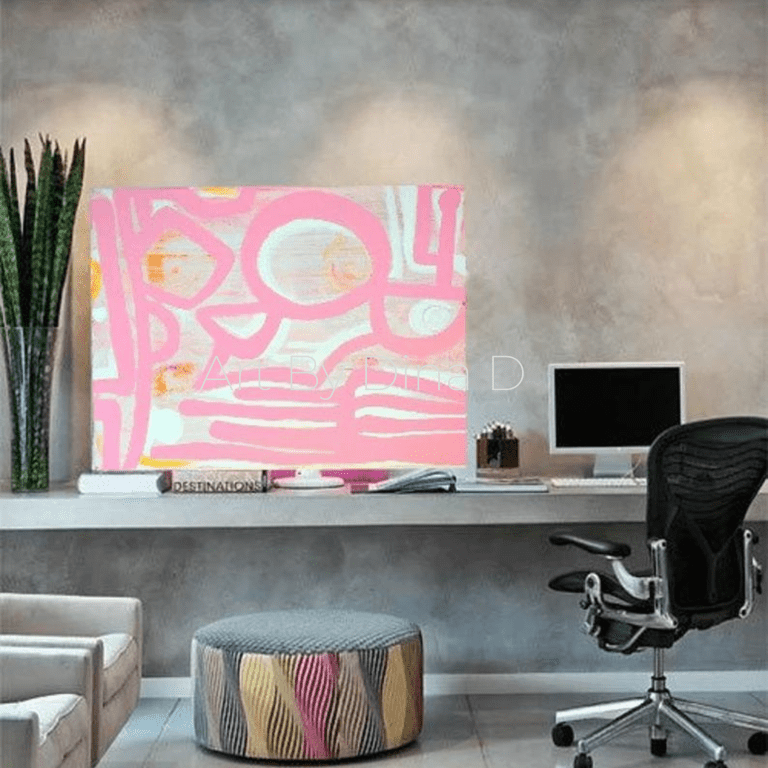
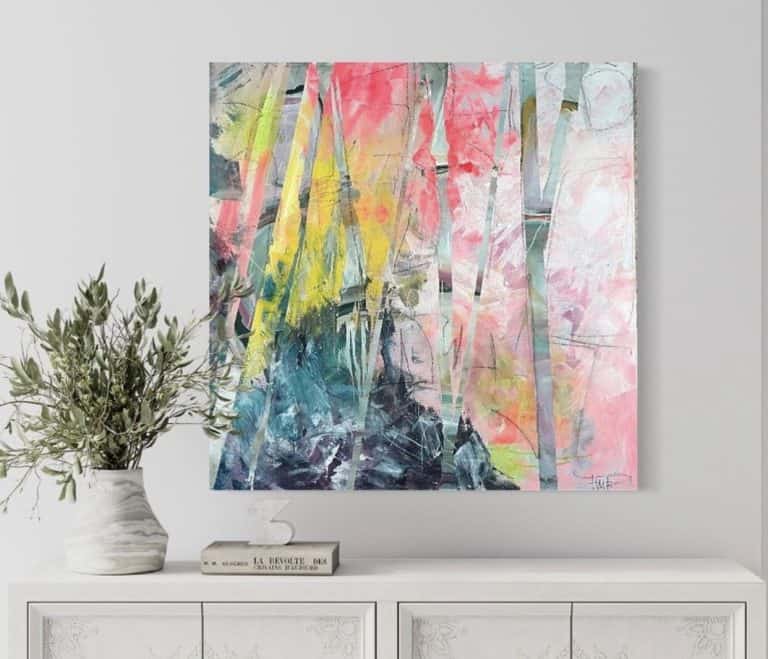
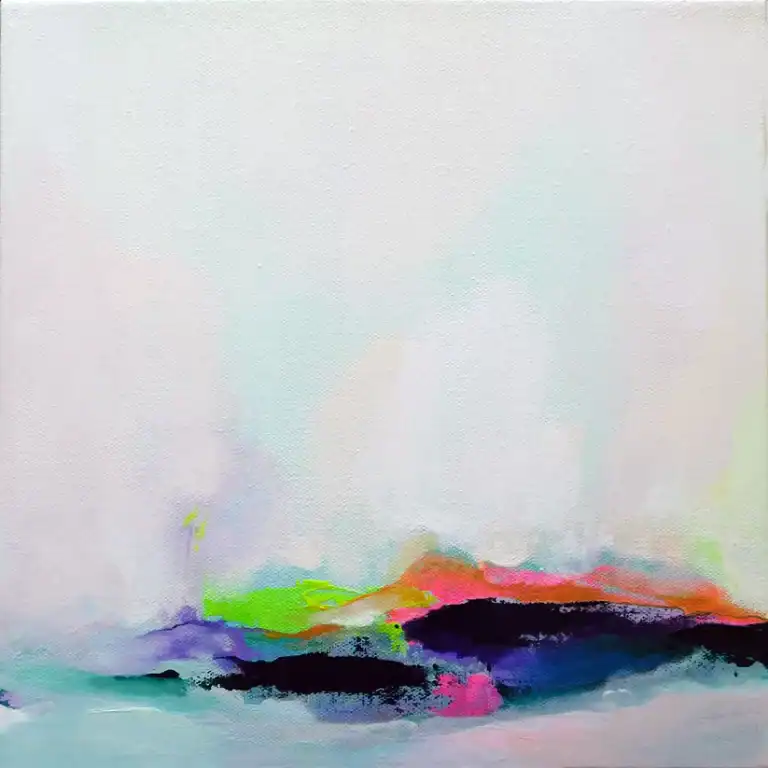
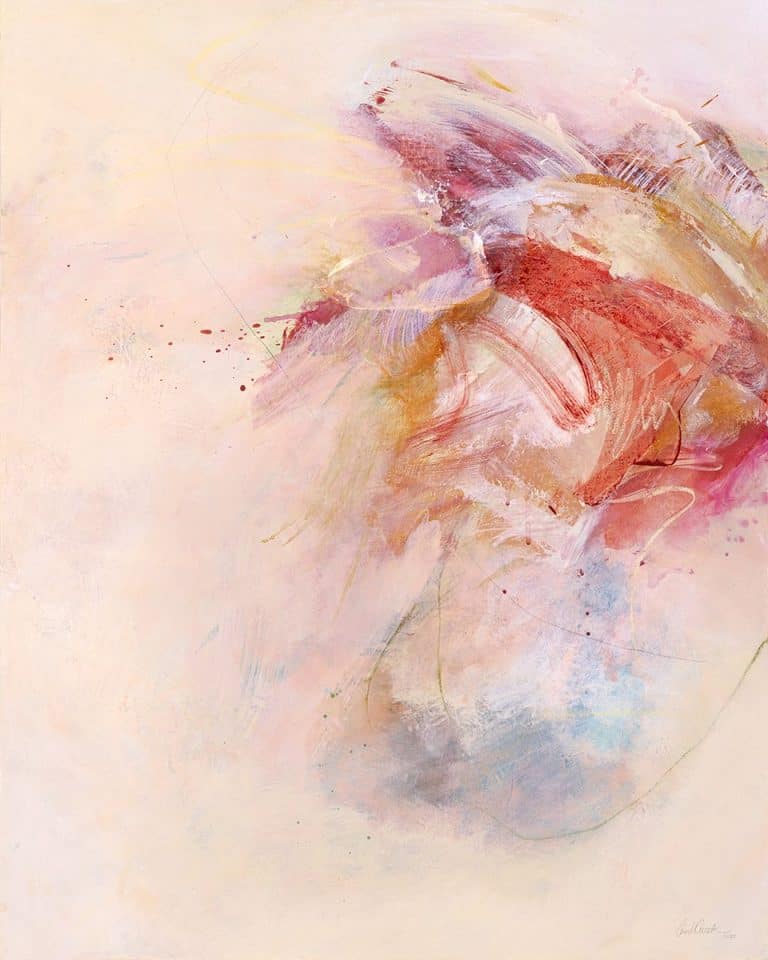
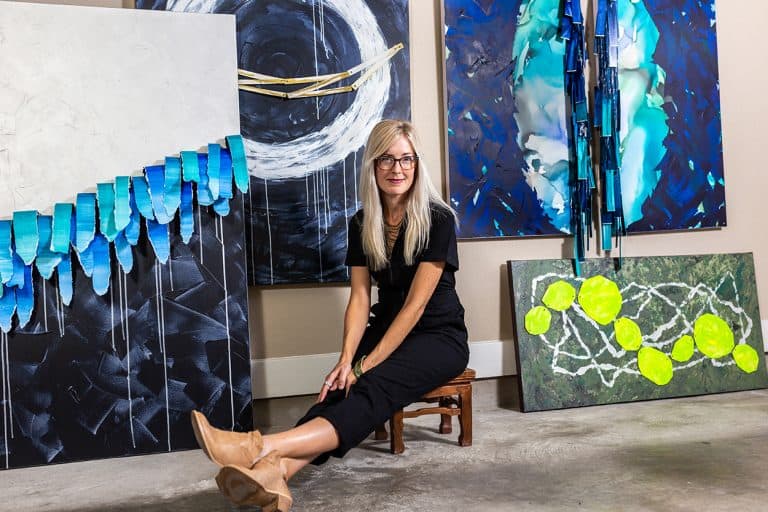
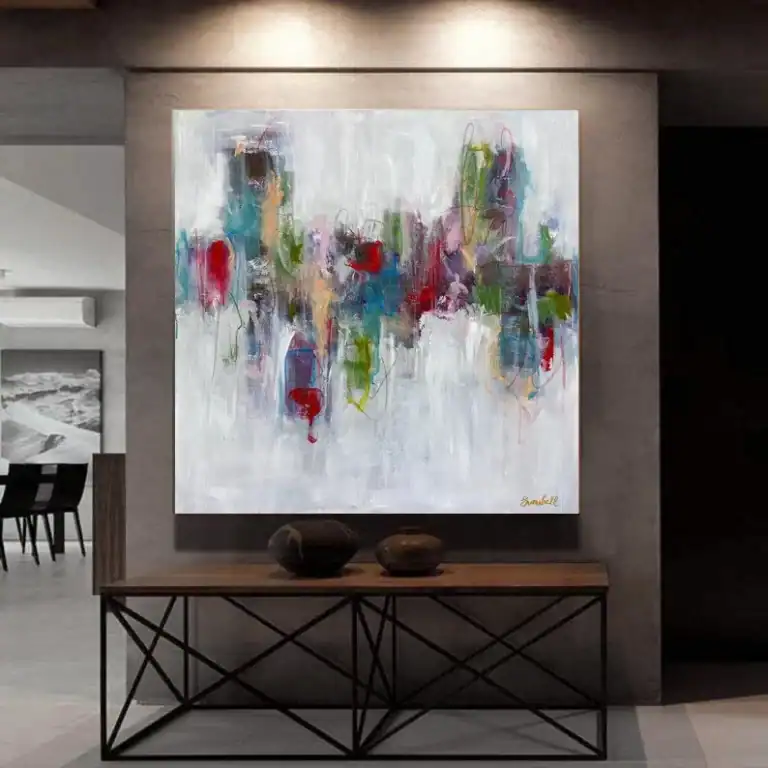
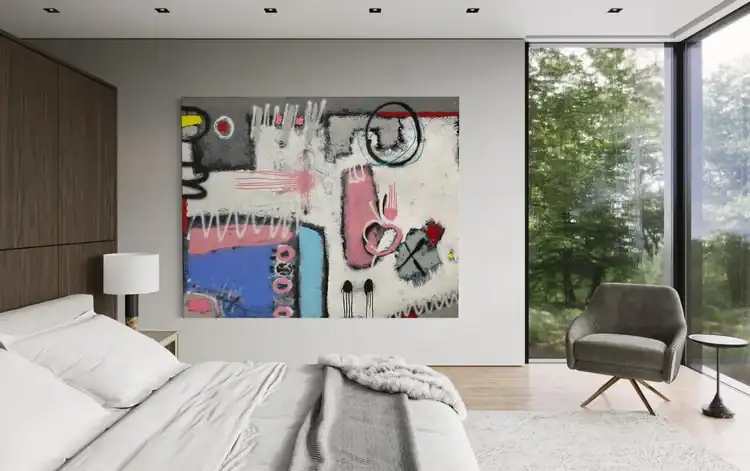
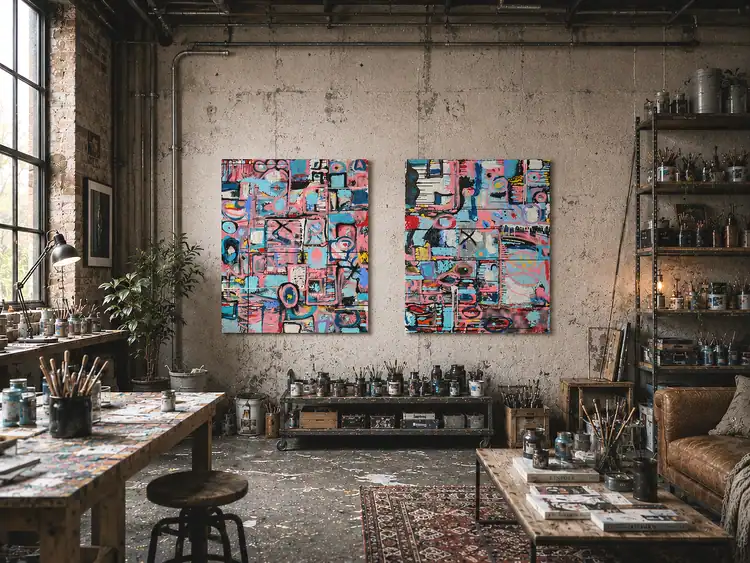
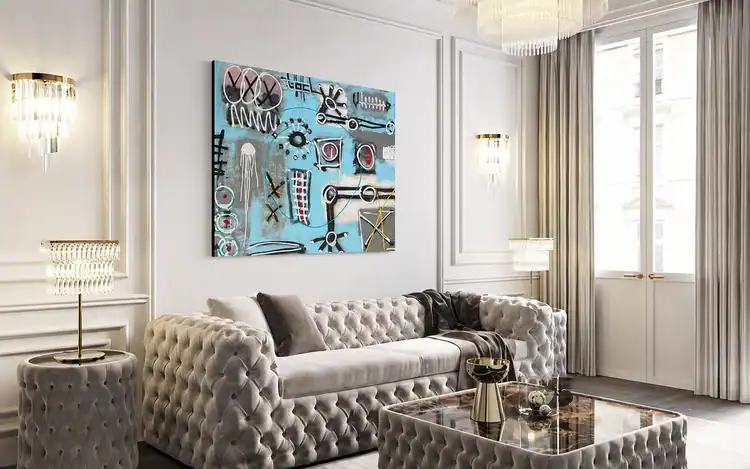
Christopher Durst is an abstract artist based in Austin, Texas. His abstract artwork is described as “atmospheric, layered, and immersive”.
Scroll down to learn more about abstract artist Christopher Durst and see more of his artwork.
All images are from the website of the artists we feature. Please do not use them without permission from the artist.
Christopher Durst Abstract Artist Austin, TX
How would you describe your artistic style?
My work lives somewhere between atmosphere, memory, and movement. I create large-scale abstract paintings built through layers of texture, gesture, symbols, and accumulated mark-making. Rather than depicting a specific subject, I am interested in creating an emotional experience that feels immersive, physical, and open to interpretation.
A lot of that comes from my years spent documenting music culture. I became fascinated with energy, tension, connection, and the feeling a place can leave behind long after the moment has passed. Today, I explore those same ideas through paint, building surfaces that feel lived in, layered, and full of human presence.
What’s the main inspiration for your art?
Inspiration comes from lived experience. Years spent traveling, documenting music culture, meeting people from different backgrounds, and moving through cities around the world shaped the way I see and interpret the world. I have always been drawn to atmosphere, human connection, and the emotional residue that places and experiences leave behind.
I also find inspiration in fragments that most people overlook. Weathered walls, handwritten notes, street markings, old photographs, symbols, textures, conversations, and memories. My paintings become a way of collecting those influences and transforming them into something new.
What’s the biggest goal you try to achieve with your art?
My goal is to create work that people can feel before they try to understand it. I want the paintings to slow people down, pull them in, and create space for reflection, curiosity, and personal interpretation. The strongest work leaves room for the viewer to bring their own experiences into the conversation.
More than anything, I want the work to have presence. I want it to live with someone for years and continue revealing something new each time they encounter it.
What’s your favorite thing about being an abstract artist?
What I love most about abstraction is the freedom it creates, both for me as the artist and for the viewer. I’m not trying to illustrate a specific story or tell people what they should see. Instead, the work becomes a space where different interpretations, emotions, and experiences can coexist.
I also love that abstraction allows me to focus on atmosphere, texture, movement, and feeling. Some of the most meaningful conversations I’ve had about my work come from two people seeing completely different things in the same painting, and both being right.
Why abstract art and not other styles? Have you always created abstract art or did you start out creating other styles?
I actually started as a photographer. For years I documented music culture from the inside, spending my life on the road, photographing artists, audiences, and the energy that existed between them. Photography taught me how to observe atmosphere, emotion, and human connection, but over time I became more interested in expressing those ideas than simply documenting them.
Abstract painting gave me a level of freedom I couldn’t find anywhere else. It allows me to explore memory, movement, texture, and emotion without being limited by a literal subject. Instead of showing people exactly what something looked like, I can focus on what it felt like. That’s what continues to draw me to abstraction today.
What’s one thing people might not know about you and your art journey so far?
One thing people might not know is that I spent years documenting music culture before painting became my primary focus. I wasn’t on the outside looking in. I was traveling, touring, and experiencing that world firsthand, photographing artists, audiences, and the moments in between. Those experiences shaped the way I see the world and continue to influence every painting I make.
Another thing people may not realize is that many of my paintings begin without a fixed plan. I rarely start with a clear image in mind. The work develops through intuition, layering, and response. In many ways, I’m discovering the painting at the same time the viewer is.
Did you always know you’d be an artist or how has your art journey progressed?
No, I don’t think I always knew I’d be an artist. Looking back, creativity was always present, but the path wasn’t a straight line. Photography became my first creative language and eventually led me into a life spent documenting music culture, traveling extensively, and immersing myself in environments that were rich with energy, emotion, and human connection.
Painting emerged later as a natural evolution of that experience. Over time, I became less interested in documenting what I was seeing and more interested in expressing what I was feeling. What began as an exploration eventually became a full commitment to creating large-scale abstract work that reflects the atmosphere, movement, and lived experiences that continue to inspire me today.
In your opinion, what’s the most important characteristic needed to embark on a career as an artist?
Talent matters, but persistence is what carries you through the years when nobody is paying attention, opportunities are scarce, and you’re still trying to find your voice. Building a life as an artist requires a willingness to keep showing up, keep creating, and keep evolving even when progress feels invisible.
You also have to be comfortable with uncertainty. There are no guaranteed outcomes in a creative career. The artists who last are often the ones who stay curious, continue learning, and remain committed to the work itself regardless of external validation.
What advice would you give up and coming abstract artists?
Spend less time trying to make art that looks like someone else’s and more time paying attention to what genuinely interests you. Your experiences, influences, obsessions, and perspective are the things that will ultimately separate your work from everyone else’s.
Also, be patient. Developing a meaningful body of work takes time. Focus on making the strongest work you can, stay curious, and keep showing up. Trends come and go, but authenticity, consistency, and a genuine commitment to your craft have a way of enduring.
What’s your most fulfilling and enjoyable experience as an artist so far?
The most fulfilling part of being an artist has been creating work that genuinely connects with people. There is something incredibly rewarding about watching someone spend time with a painting, discover their own meaning within it, and form a personal connection to the work that I could never have predicted.
More broadly, the journey itself has been deeply fulfilling. I’ve been fortunate to build a creative life through both photography and painting, experiences that have allowed me to travel, meet remarkable people, and engage with culture in a meaningful way. Looking back, the greatest reward hasn’t been any single exhibition or accomplishment. It’s been the opportunity to spend my life creating and sharing work that reflects the experiences, places, and people that have shaped me.
Do you have any favorite podcasts or books that have contributed to your journey as an artist?
I’m drawn to books and conversations that explore creativity, culture, psychology, and the human experience more than art instruction itself. A few books that have stayed with me are The War of Art by Steven Pressfield, Man’s Search for Meaning by Viktor Frankl, and Meditations. They aren’t art books, but they all speak to discipline, purpose, resilience, and perspective, which are just as important to an artist’s development as technique.
As for podcasts, I tend to gravitate toward long-form conversations with artists, musicians, entrepreneurs, and creative thinkers. Some of the most valuable insights I’ve gained haven’t come from studying art directly, but from listening to how people from different disciplines approach their work, navigate challenges, and build meaningful lives around what they create.
What do you love most about abstract art?
What I love most about abstract art is that it invites participation. Instead of telling the viewer exactly what to see, it creates space for personal interpretation, memory, emotion, and imagination. Two people can stand in front of the same painting and have completely different experiences, and both can be equally valid.
I also love its ability to communicate things that are difficult to put into words. Atmosphere, tension, movement, memory, and feeling are often more powerful when they’re suggested rather than explained. Abstract art allows me to explore those ideas in a way that feels open, intuitive, and endlessly evolving.
Where do you see yourself and your art 5 years from now?
In five years, I hope to be doing exactly what I’m doing now, just on a larger scale. I want to continue refining my voice as an artist, creating increasingly ambitious work, and placing paintings in significant private and public collections. My focus is on building a body of work with depth, consistency, and longevity rather than chasing any single milestone.
I also hope to continue contributing to the broader creative community through Aurora, the cultural ecosystem I’m building for artists and cultural leaders. Whether through my paintings, collaborations, or the communities I help cultivate, my goal is to keep creating meaningful experiences that bring people together and contribute to culture in a lasting way.
Do you have any favorite quotes?
Absolutely. A lot of the quotes that have stayed with me come from music, photography, and people who dedicated their lives to creative expression.
One that has always resonated with me is from David Bowie:
“Always go a little further into the water than you feel you’re capable of being in.”
To me, that’s what creativity is about. Growth happens when you’re willing to move beyond what’s comfortable and into the unknown.
I’ve also always loved this quote from Ansel Adams:
“There are always two people in every picture: the photographer and the viewer.”
Even though I paint now, that idea still influences my work. Art becomes complete when someone brings their own experiences and perspective to it.
And of course, there’s a quote often attributed to Keith Richards that feels fitting given my background in music culture:
“It’s only rock and roll, but I like it.”
Simple, honest, and a reminder not to lose sight of the joy that drew you to creativity in the first place.
Anything else you’d like to mention?
I think I’d simply say that I’m grateful for the journey. Every experience, from years spent documenting music culture to the transition into painting, has shaped the way I create and see the world. None of it feels separate. It’s all part of the same creative path.
If there’s one thing I hope people take away from my work, it’s a sense of curiosity. I want the paintings to invite people to slow down, look a little longer, and discover something of their own within the experience. At its best, art creates connection, and that’s ultimately what continues to inspire me to make it.
See More: USA Abstract Artists | Austin, Texas Abstract Artists