Carolyn O’Neill
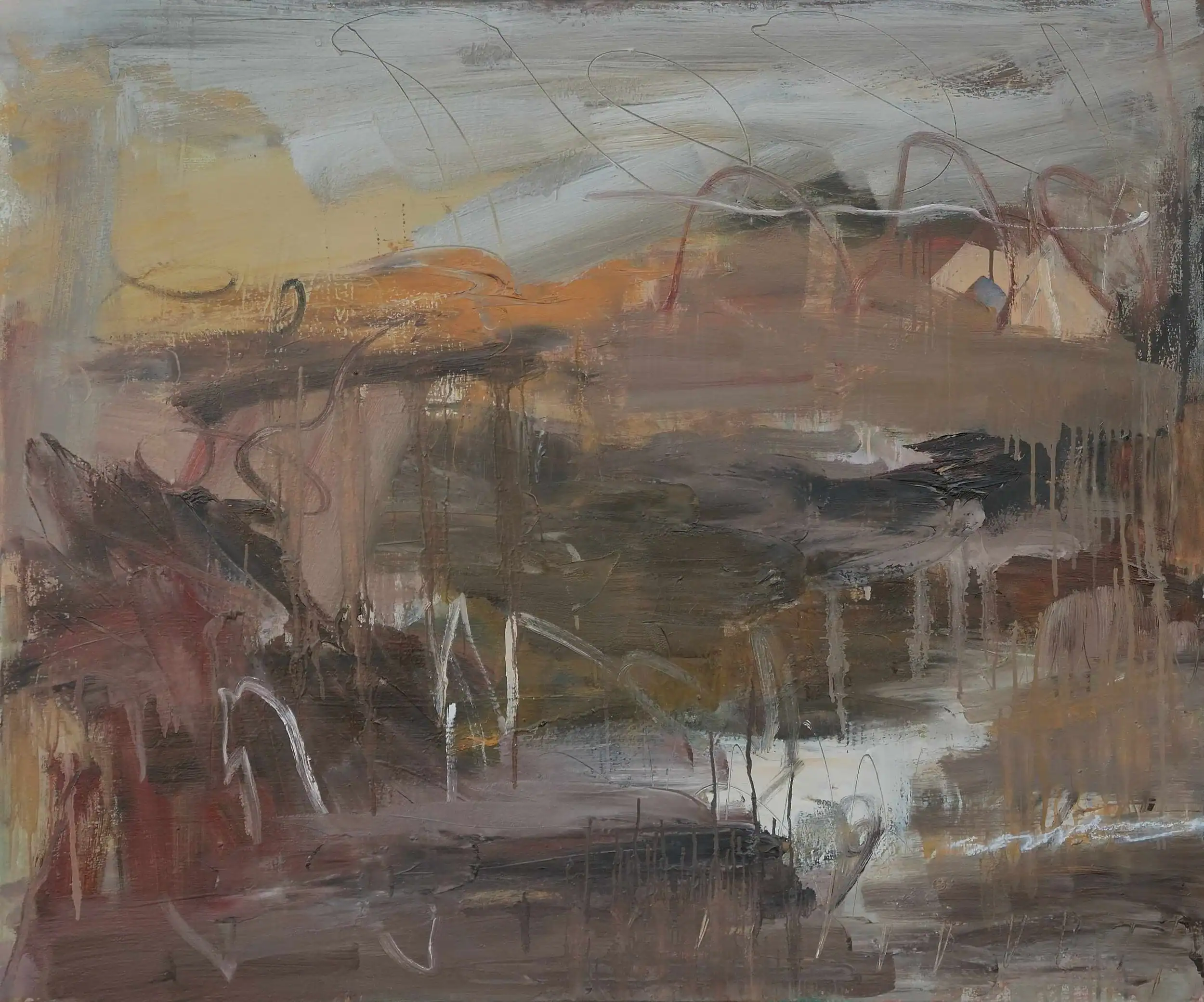
Carolyn O’Neill is an Australian abstract artist based in Port Pirie. Her abstract artwork is described as “contemplative, ambiguous, and complex”.
Scroll down to learn more about Carolyn O’Neill and see more of her artwork.
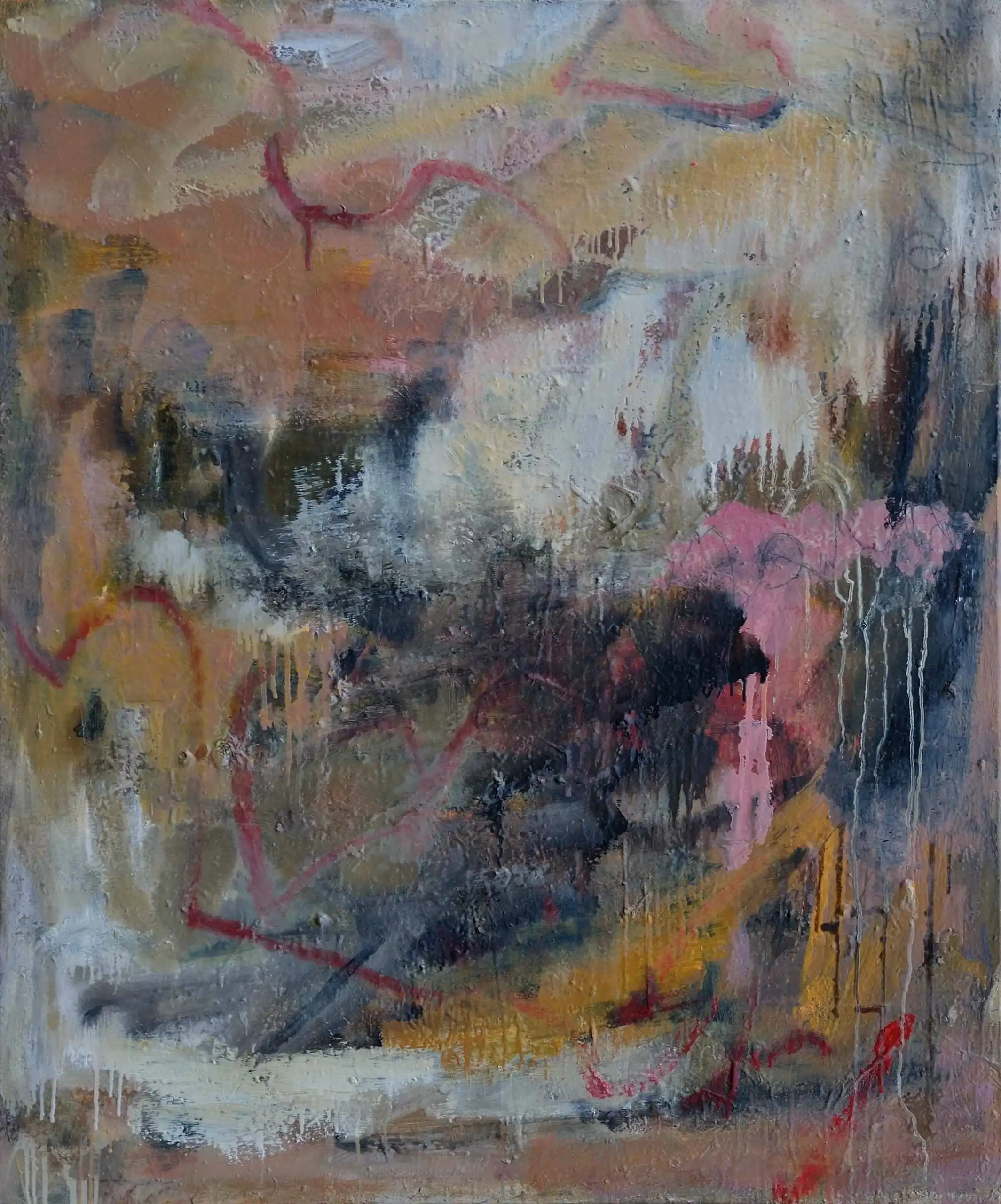
All images are from the website of the artists we feature. Please do not use them without permission from the artist
Carolyn O’Neill Abstract Artist
What’s the main inspiration for your art?
Although many things inspire me, my foremost inspiration stems from the origins abstract expressionism. The artists of 1950’s New York Art school were true visionaries and pioneered this genre. If it were not for the artists Hans Hoffman, Willem and Elaine De Kooning and Joan Mitchell to name a few, I would have no foundation on which to build my art.
What is the biggest goal you try to achieve with your art?
My biggest goal by far would have to be a balanced composition. Just like a building with no solid foundations or structure will eventually collapse, so too will a painting. It will be unreadable and have nothing to say. What I am seeking is a cohesive visual dialogue expressed via the bold application of paint onto the canvas. Each subsequent layer or mark dictates the next, this state of flux is a back and forth process. There is a visual conversation taking place and the work begins to build layer by layer or brick by brick, much like a construction, adding strength to the work.
What’s your favorite thing about being an abstract artist?
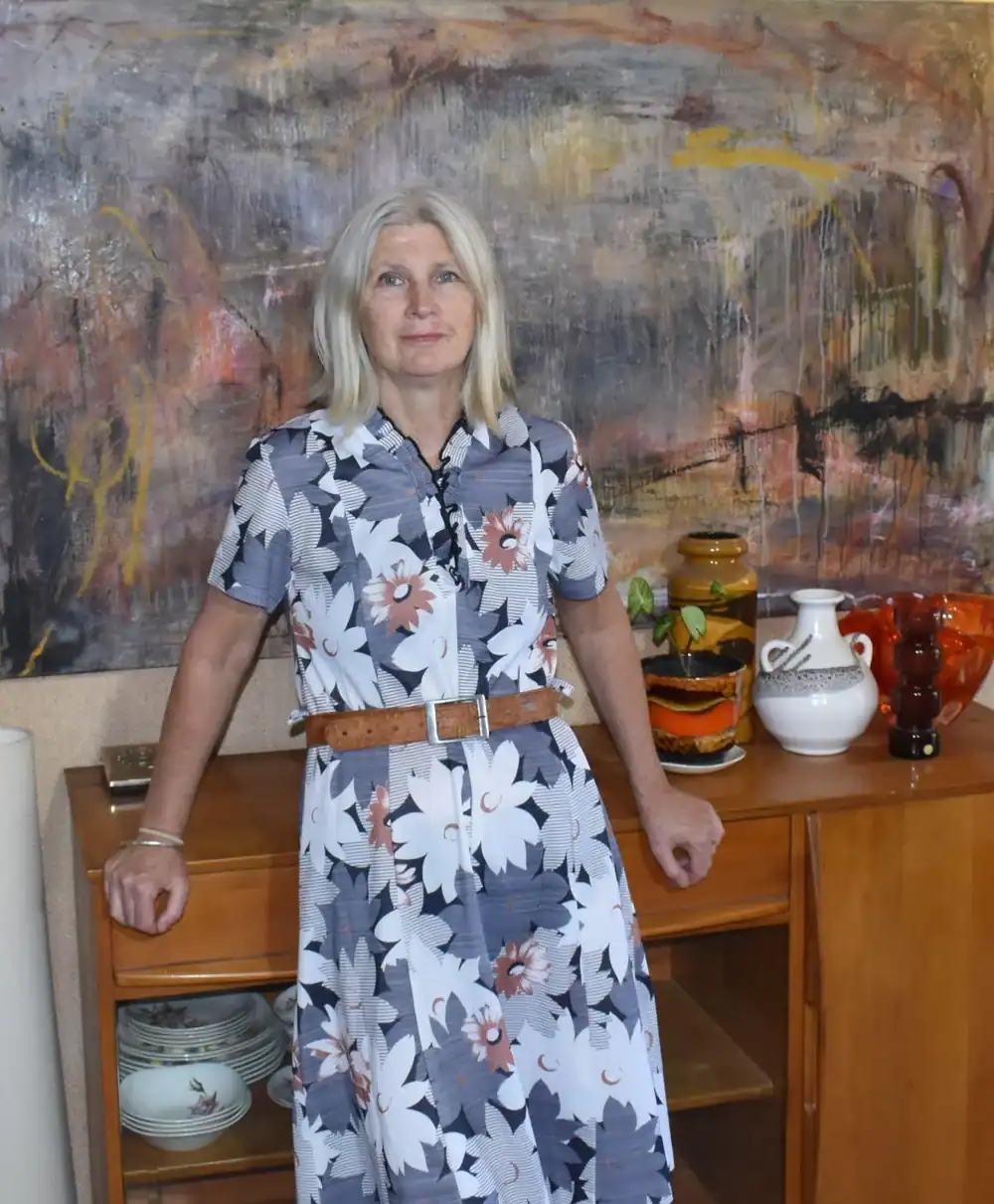
It would have to be the process of working with the art materials; such as building up layers, spontaneous mark making and allowing the drips to fall where they land. Taking risks and trusting the creative process; letting go of control and intuitively connecting with my emotions whilst allowing space for them to be expressed. There is a vulnerability required in order to create authentic art whereby I become fully immersed in the creative flow and one with the materials. The integration of mediums such as cold wax and oil sticks infuses with the canvas adding depth and dimension to the work. The creative process constantly challenges me to dig deeper and seek out new methods of mark making whilst pushing my work further to reach the very essence of what I seek to communicate visually.
Why abstract art and not other styles? Have you always created abstract art or did you start out creating other styles?
An initial fascination with non representational art led me on this journey. It was my TAFE art tutor who encouraged me to gather images of famous abstract artworks and seek to decipher which techniques were employed. This curiosity compelled me to experiment with diluted house paint and the use of obscure objects such as tooth brushes and grouting tools. Prior to that I briefly dabbled in expressive landscapes.
What’s one thing people might not know about you and your art journey so far?
Something that I struggle with is finding a title for my work. Since abstract art is not based on anything representational, there is nothing concrete on which to ground the work. It can take time of just sitting at the easel and waiting for it to ‘speak to me.’ What emotion was I feeling when I used a particular shade of pink? What am I seeking to communicate?
The creative process is not just physical, it is also emotional and spiritual. Quite often I get so immersed in the process that I become detached from the work and just need to take time to reflect on it for a few days or even months before a title emerges.
Abstract art is ambiguous, and therefore open to interpretation. Although a title is merely a window or a glimpse into the work, it does make way for a dialogue.
On rare occasions some fitting lyrics of a song or a biblical passage comes to mind and the titling of a piece can be almost immediate. Once a painting is given a title I tend to feel more connected to it and it begins to reveal a story leading me deeper into the work.
Did you always know you’d be an artist or how has your art journey progressed?
No, not at all. My background is in psychiatric nursing, it wasn’t until I saw a colourful mural painted at my son’s kindergarten foyer some years ago that I enquired about local art classes and went onto pursue formal art studies. However there is a profound correlation between the emotional aspects of creative self expression and it’s mental health benefits.
Not too long ago there was a period when my art felt stagnant, I was stuck. This became a catalyst and led me to study online with abstract artist and psychiatrist Dr Nancy Hillis. This intensive study has been pivotal and foundational in my art practice.
In your opinion, what’s the most important characteristic needed to embark on a career as an artist?
Tenacity; being an artist is not an easy path, but it is very rewarding. However, consistency is key, turn up to you studio, whether it be your dining table or garage (my studio is in my garage). However if you have dedicated space where you don’t have to pack your art materials away after each session you are more likely to show up, even if it is just to tidy and organise your space. Creative time in your studio is never a waste of time.
What advice would you give up and coming abstract artists?
Try and keep your work consistent, even it if is just one or two aspects such as the colour palette or specific marks, this will help you to discover your own unique artist voice. Try and avoid ‘trends’ which are fleeting. Remain teachable and experiment with out expecting a finished result.
The creative process is far more important than the end product. Study the basics of composition and the elements and principles of design, such as line, form and colour. Use a visual diary and large sheets of paper to experiment with unusual mark marking tools, raid your kitchen drawer or your garage. Try restricting yourself to a limited palette of one to three primary colours plus black and white. Take the time to learn about colour theory and how to mix your own palette.
Be willing to paint over or ‘dismantle’ your work in order to rebuild and strengthen it, this is an essential step in the editing process. Also try and take constructive criticism onboard and learn from it without taking it personally. And as I learnt early on, don’t be ‘precious’ with your work and try not to compare yourself with other more ‘successful’ artists, especially on social media. Unfollowing several artists on Instagram has freed me from the unrealistic comparison trap. Keep creating, even if your work doesn’t sell.
What’s your most fulfilling and enjoyable experience as an artist so far?
In 2020 I was invited to exhibit at my local Regional Art Gallery, the exhibition was titled ‘A view to the foothills’ which was inspired by the unique arid landscape of the local mid north Flinders Ranges region where I currently reside. This was a significant milestone in my artistic career.
Do you have any favorite podcasts or books that have contributed to your journey as an artist?
I know it sounds cliché, but a few years before I began to paint I purchased a copy of ‘The Artist’s Way’ by Julia Cameron. It made quite an impact on me at the time, however I didn’t know how or where to start my creative journey. Oh and my online mentor Nancy Hillis’s book ‘The Artist’s Journey’ is also a great resource for artists. Art Juice is quite an informative podcast.
What do you love most about abstract art?
It would have to be the freedom that I sense in not having to create something representational. I don’t need to get stuck in details of translating from a scene or portrait for instance and I am free to intuitively express my inner emotions. The work can be rotated and seen from different angles as it isn’t fixed in orientation. Abstract art is the emotional expression of design and colour and form.
Where do you see yourself and your art 5 years from now?
In five years time I hope to see my work more evolved and developed and not stagnant as it has been in the past.
Do you have any favorite quotes?
“It doesn’t matter how the paint is put on, as long as something is said.” Jackson Pollock.